
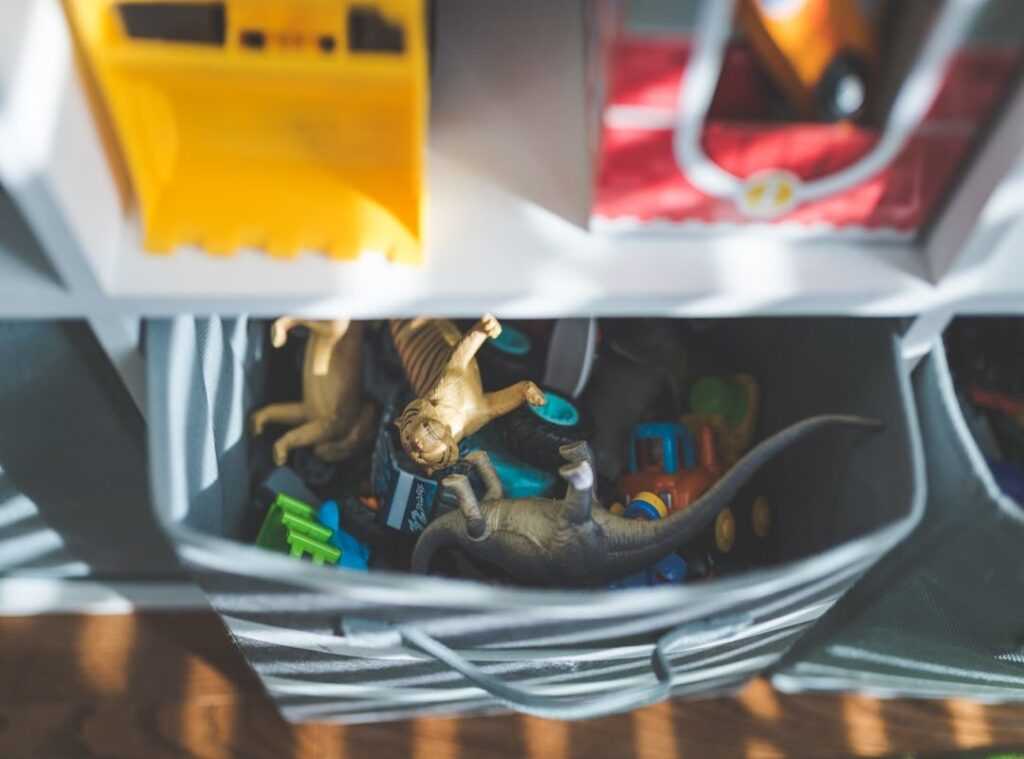
Ever stepped on a LEGO? It’s like a sneak attack from a tiny, plastic ninja. After a long day, the last thing you want is to face a battlefield of toy chaos.
I’m here to tell you it doesn’t have to be this way.
Modern parenting is already hard enough. I’ve been through the mess and the stress, finding systems that actually work. Systems that don’t make you buy another mountain of bins.
These playroom organizational tips aim to transform chaos into calm, creating a space that encourages your child’s independence while keeping your sanity intact.
Doesn’t it sound great to have a room that cleans up almost by itself? Stick around. You’ll get practical, sustainable ideas that work for both you and your kids.
Let’s turn this mess into a masterpiece.
Why Kid-Focused Organization Rocks
I’ve seen it all when it comes to messy playrooms. But here’s the thing: organizing isn’t just about keeping parents sane. It’s a developmental powerhouse for kids.
When a playroom is organized, it’s like magic for reducing kids’ overstimulation. Ever notice how your child gets lost in deep play when the space isn’t cluttered? That’s because a tidy space cuts down on decision fatigue, letting them focus.
Now, let’s talk about self-management. Accessible storage (you know, the kind even little hands can reach) and clear systems teach kids independence. They’re not just dumping toys anymore; they’re learning responsibility.
It’s amazing to see how their confidence shoots up when they manage their stuff.
This isn’t an overnight miracle, though. It’s a journey. Gentle parenting?
It’s all about respecting their environment and capabilities. We owe it to our kids to create spaces where they can thrive.
Struggling with streamlining your kid’s morning routine? Check out streamlining school morning routines. You’ll find it all ties together.
So, there you have it. These playroom organizational tips aren’t just tips. They’re tools for your child’s growth.
What are you waiting for? Go help your kids (and maybe even reclaim a little sanity for yourself).
Declutter First: Toy Overload Under Control
Here’s the thing: buying storage before sorting is like putting the cart before the horse. You end up with bins full of junk instead of a neatly organized playroom. That’s why the first step is a foundational declutter.
You can’t organize chaos.
Start by sorting toys into four piles: Keep, Donate/Sell, Store, and Toss. The Keep pile is self-explanatory. The Donate/Sell pile helps clear space while giving toys a new home.
Storage is for those toys that aren’t daily favorites but might circle back into your routine. And Toss is for broken or incomplete items. (Admit it, you have toys that should just be gone.)
Involve your kids. It’s their stuff, after all. Ask them to choose 10 special toys to keep in their room.
This gives them some ownership over the process. Plus, it teaches them to value their belongings.
Now, let’s talk toy rotations. This is where the magic happens. The concept is simple.
Suddenly, the playroom feels less cluttered, and your kids get excited over “new” toys.
You store a portion of toys out of sight and cycle them back in every few months. When toys reappear, they feel new again. Store the “out” toys in a closet or even a basement corner.
Pro tip: Keep rotations regular. Maybe sync it with the seasons or a school semester. It’s one of my favorite playroom organizational tips for maintaining sanity.
Does this sound tedious? Maybe. But the payoff is a serene, organized space where you never step on a LEGO again.
Worth it? Absolutely.
Smart Storage Solutions Kids Can Actually Use
When it comes to organizing a playroom, think accessibility. Kids need to see, touch, and grab their stuff without adult intervention. I mean, haven’t we all been roped into finding a toy that’s mysteriously vanished under a mountain of blocks?
Let’s talk open shelving and cube units first. Low and open shelves are a game-changer! Think Montessori style, where everything is within reach and visible.
IKEA’s KALLAX units are popular for a reason. They give kids the freedom to pick and choose without any hassle. Plus, these units grow with them.
Perfect for books today, gaming consoles tomorrow.
Next, the magic of clear bins and picture labels. Have you ever tried rummaging through a solid-colored box while looking for that one hard to find stuffed animal? Clear containers put an end to that.
You see all the chaos at a glance. For those pre-readers, picture labels are genius. Drawings or photos stuck on bins help them (and us) remember where things belong.
This is how you build habits early on.
Oh, and don’t forget about utilizing vertical space. Why keep everything at floor level? Wall-mounted book ledges are perfect for not just books, but little knick-knacks.
Those small items seem to travel all over the house otherwise. Hanging fabric organizers work wonders for dolls or crafts. Anything that can hang should hang.
I once saw magnetic strips used for toy cars. Brilliant! Keeps them off the floor and on display.
Looking for simple tricks encourage kids tidy up? This system practically nudges them toward cleanliness. Honestly, the whole point is to make tidying up not feel like a chore.
So, if you’re looking for playroom organizational tips, consider the space from a child’s eye level. You’ll thank yourself later. Sometimes, the best solutions are the simplest ones.
Purposeful Play: Zones for Fun and Easy Cleanup
Zoning a playroom is more about sanity than style. Trust me. When different areas are designated for different activities, cleanup becomes intuitive.
Imagine this: a cozy reading nook with a soft rug and cushions. Books on forward-facing shelves invite kids to dive in. They love it, and you will too (less mess on the floor).
Now, consider an art and creation station. A small table with jars or caddies for supplies offers easy access. Toss in a paper roll and watch creativity flow.
Next to that? A building zone. Blocks, LEGOs, and trains deserve their own spot, preferably on a play mat to contain rogue pieces.
Don’t forget imaginative play. Think dress-up clothes, a play kitchen, or a dollhouse. These areas fuel creativity and keep toys from wandering into the wrong zone.
When it’s time to tidy up, just say, “Put the blocks back in the building zone.” Simple, right?
The real magic of zoning is how it transforms chaos into order. Kids know where things belong, and you avoid stepping on tiny toys. For more playroom organizational tips, you can dive deeper into effective strategies.
In essence, zoning makes play purposeful and cleanup a breeze. It’s not just about reducing clutter, but enhancing playtime. Try it.
You’ll thank me later. Deliberate zones equal happy kids and parents.
Tidy Up: Daily Habits for a Sustainable Playroom
Ever felt defeated by a messy playroom? We all have. One trick I swear by is the 10-Minute Tidy.
Before bedtime (or any major transition), set a timer for ten minutes. It’s like magic. Everyone pitches in, and suddenly chaos turns into order.
Make it fun: “Can we put everything away before the song ends?”
And here’s another gem: the ‘one in, one out’ rule. For every new toy, one goes out. Keeps clutter at bay.
Cleanup isn’t a solo mission. Make it a game, a team effort. Playroom organizational tips don’t have to be boring.
They can be a lifesaver.
Stress-Free Play Starts Here
Constant toy chaos drives us all nuts. Trust me, I’ve been there. A child-centric system works wonders.
For real peace, start small. Choose a zone or bin to organize this weekend. You’ll see a difference.
Check out playroom organizational tips to make the playroom a calm oasis. Start now.
 Vynric Velmyre has opinions about childcare hacks for busy moms. Informed ones, backed by real experience — but opinions nonetheless, and they doesn't try to disguise them as neutral observation. They thinks a lot of what gets written about Childcare Hacks for Busy Moms, Fresh Insights, Curious Collections is either too cautious to be useful or too confident to be credible, and they's work tends to sit deliberately in the space between those two failure modes.
Reading Vynric's pieces, you get the sense of someone who has thought about this stuff seriously and arrived at actual conclusions — not just collected a range of perspectives and declined to pick one. That can be uncomfortable when they lands on something you disagree with. It's also why the writing is worth engaging with. Vynric isn't interested in telling people what they want to hear. They is interested in telling them what they actually thinks, with enough reasoning behind it that you can push back if you want to. That kind of intellectual honesty is rarer than it should be.
What Vynric is best at is the moment when a familiar topic reveals something unexpected — when the conventional wisdom turns out to be slightly off, or when a small shift in framing changes everything. They finds those moments consistently, which is why they's work tends to generate real discussion rather than just passive agreement.
Vynric Velmyre has opinions about childcare hacks for busy moms. Informed ones, backed by real experience — but opinions nonetheless, and they doesn't try to disguise them as neutral observation. They thinks a lot of what gets written about Childcare Hacks for Busy Moms, Fresh Insights, Curious Collections is either too cautious to be useful or too confident to be credible, and they's work tends to sit deliberately in the space between those two failure modes.
Reading Vynric's pieces, you get the sense of someone who has thought about this stuff seriously and arrived at actual conclusions — not just collected a range of perspectives and declined to pick one. That can be uncomfortable when they lands on something you disagree with. It's also why the writing is worth engaging with. Vynric isn't interested in telling people what they want to hear. They is interested in telling them what they actually thinks, with enough reasoning behind it that you can push back if you want to. That kind of intellectual honesty is rarer than it should be.
What Vynric is best at is the moment when a familiar topic reveals something unexpected — when the conventional wisdom turns out to be slightly off, or when a small shift in framing changes everything. They finds those moments consistently, which is why they's work tends to generate real discussion rather than just passive agreement.