
If you’re searching for practical, realistic ways to make family life smoother, you’re in the right place. Parenting comes with constant questions—how to create calmer routines, support your child’s development, and manage the everyday chaos without feeling overwhelmed. This article is designed to meet that need with clear, experience-backed guidance you can apply right away.
From gentle parenting approaches to simple childcare hacks and even organizing kids clothes efficiently, we focus on solutions that save time, reduce stress, and nurture connection at home. Every recommendation is grounded in current parenting research, child development principles, and insights gathered from experienced caregivers who understand the realities of modern motherhood.
Whether you’re looking to build healthier habits, create more peaceful daily rhythms, or simply feel more confident in your parenting choices, you’ll find practical strategies here that are thoughtful, trustworthy, and easy to implement.
Clothing chaos isn’t a parenting failure; it’s a systems failure. Most advice tells you to buy more bins or color-code everything. However, more containers won’t fix inconsistent habits.
Instead, use a simple three-step loop: sort, size-check, reset. First, sort by daily wear, special occasion, and donate. Next, size-check monthly—if it pinches or floods, it goes. Finally, reset drawers to a realistic weekly rotation (yes, fewer options mean faster mornings).
This approach to organizing kids clothes efficiently works because it’s repeatable, not perfect. Pro tip: keep a donation bag in closet. After all, mornings should feel calm—not like reality show challenge.
The Foundation: One In, One Out (and Other Core Principles)
Principle 1: The “One In, One Out” Rule. Every time a new shirt or pair of pajamas comes home, one older item leaves. This simple boundary stops clutter before it starts. The benefit? Closets stay breathable, laundry feels lighter, and you save money by thinking twice before buying. (Impulse buys lose their power.)
Principle 2: Everything Needs a Home. When each category—socks, school uniforms, play clothes—has a designated drawer or bin, you eliminate “doom piles.” Clear homes mean faster mornings and fewer frantic searches for that missing sneaker. Pro tip: label shelves with words and pictures so everyone knows where things belong.
Principle 3: Make It Accessible for Kids. Low rods and easy drawers empower independence. When children can reach and see their options, organizing kids clothes efficiently becomes a shared habit. The payoff is confidence and teamwork.
Step 1: The Ruthless Purge (What to Keep, Toss, and Store)
As you streamline your kids’ wardrobes for smoother mornings, remember the wisdom found in A Collection of Timeless Parenting Quotes and What They Teach Us about embracing simplicity in family life.
I’ll never forget the first time I dumped my daughter’s entire dresser onto the floor. It looked like a tiny clothing tornado had touched down in her room. That was my wake-up call. If you’re serious about organizing kids clothes efficiently, you have to start with EVERYTHING in one giant pile. Yes, it’s dramatic. Yes, it works.
The Four-Box Method
Grab four boxes and label them in big, unapologetic letters:
- KEEP
- STORE
- DONATE/SELL
- TRASH
Here’s the rule: every single item must go into one box. No “maybe” pile (that’s just procrastination wearing a cute outfit).
| Box | What Goes In | Quick Test |
|---|---|---|
| Keep | Fits now, good condition, actually worn |
Worn in last month? |
| Store | For sibling or sentimental | Clean and worth space? |
| Donate/Sell | Gently used, outgrown | Someone else would use it? |
| Trash | Stained, torn, unusable | Beyond repair? |
Some parents argue you should keep everything “just in case.” I used to think that too. But UNUSED CLOTHES ARE JUST CLUTTER. According to home organization experts, reducing visible clutter lowers stress and decision fatigue (Princeton Neuroscience Institute).
If it doesn’t fit now and isn’t meaningful, let it go. Donate to local shelters, consignment shops, or community groups. Pro tip: seasonal resale events can return a small profit.
Letting go isn’t wasteful. It’s freeing. And trust me—your future laundry-day self will thank you.
Step 2: Strategic Organization (The Right Bins and Folds)
Drawer vs. Closet: Make It Simple
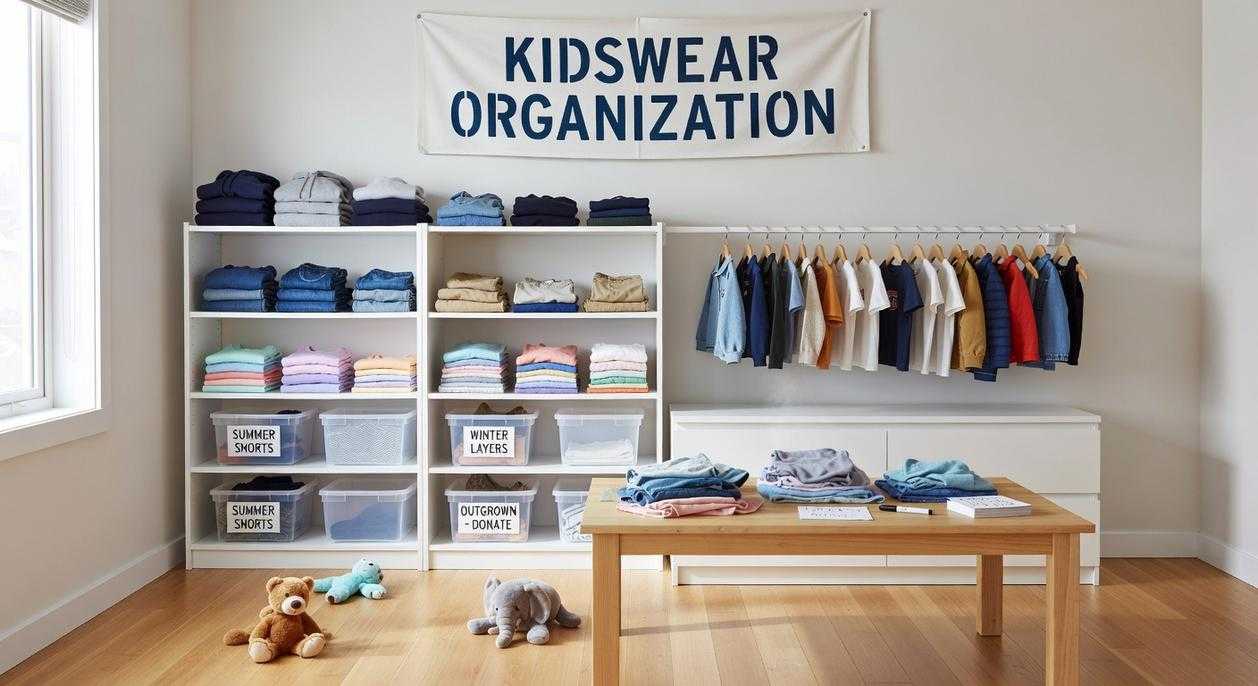
When it comes to organizing kids clothes efficiently, the first decision is what gets hung and what gets folded. A simple rule works best: hang dresses, jackets, and nice shirts; fold t-shirts, pajamas, leggings, and play clothes. Why? According to home organization studies published in the Journal of Environmental Psychology, visual accessibility reduces decision fatigue and clutter buildup. Hanging bulkier or wrinkle-prone items keeps them wearable, while folding everyday basics maximizes drawer space.
Some parents argue that hanging everything saves time. In theory, yes. In reality? Kids tug items off hangers (like a tiny retail clearance rack), and closets become chaotic fast.
The Magic of Drawer Dividers
Drawer dividers are non-negotiable. Without clear boundaries, socks migrate, pajamas tangle, and categories blur within days. Adjustable bamboo or acrylic dividers work well because they grow with changing sizes. A 2021 IKEA consumer survey found that households using drawer compartment systems reported maintaining organization 30% longer than those without.
Folding Techniques That Save Space
File folding (popularized by Marie Kondo) allows clothes to stand upright so every item is visible. This reduces rummaging, which researchers link to faster drawer disorganization. Pro tip: teach kids to fold just one category first—mastery builds momentum.
Using Labels to Build Independence
Picture labels on drawers help pre-readers identify where items belong. Montessori-based classrooms use visual labeling to increase task independence—and it works at home, too. When kids can match socks to a sock icon, cleanup becomes routine (not a daily debate).
And if simplifying routines overall is your goal, check out meal prep ideas that make weeknights easier with kids.
Step 3: The Seasonal Swap (A Twice-a-Year Reset)
Ever open a drawer and find swimsuits in December—or sweaters in July? That’s your cue. The Seasonal Swap is your twice-a-year reset for organizing kids clothes efficiently without constant clutter battles.
First, create an “Off-Season” bin—a clearly labeled, airtight container for clothes not currently in rotation. Store it somewhere out of the way, like under the bed or on the top closet shelf. (Out of sight really does mean out of mind.) Airtight bins also help protect fabrics from moisture and pests, which can damage natural fibers over time (Good Housekeeping Institute).
Next, schedule the swap. Why not add a recurring reminder in April and October? When it’s on the calendar, it becomes routine instead of a someday task.
Finally—and this is key—do a mini-purge. Are there pieces that are too small, stretched out, or mysteriously stained? Donate or discard them before storing anything away. After all, why pack up clutter you won’t want later?
Stress-free mornings aren’t a myth—they’re a system. By organizing kids clothes efficiently from purchase to purge, you eliminate the 7:42 a.m. sock scramble (you know the one). Start with a ruthless edit: if it’s stained, outgrown, or never worn since the fall festival at the elementary school, let it go. Next, set up drawer dividers—think boutique-style merchandising, not bargain-bin chaos. Then, schedule a January and July reset to match school semesters and seasonal shifts.
Some parents say this sounds excessive. Fair. But chaos costs time. Block one hour this weekend and begin. You’ll thank yourself on Monday morning. Trust me.
Make Everyday Routines Easier and Stress-Free
You started this guide looking for a simpler way to manage the chaos that comes with kids’ wardrobes — and now you have practical, realistic strategies to make it happen. From sorting smarter to creating systems your children can actually follow, you’re equipped to take control instead of feeling overwhelmed by cluttered drawers and overflowing baskets.
The frustration of mismatched socks, outgrown outfits, and messy closets doesn’t have to be your daily norm. When you focus on organizing kids clothes efficiently, you save time, reduce stress, and create smoother mornings for the whole family. That’s not just organization — it’s peace of mind.
Now it’s your turn to take action. Start small today: pick one drawer, one bin, or one closet section and apply what you’ve learned. If you’re ready for even more practical parenting systems trusted by thousands of families, explore our proven tips and family-friendly solutions designed to simplify your home life. Don’t let clothing chaos run your routine — take control today and enjoy a calmer, more organized home.
 Ask Anthony Coughlinazey how they got into curious collections and you'll probably get a longer answer than you expected. The short version: Anthony started doing it, got genuinely hooked, and at some point realized they had accumulated enough hard-won knowledge that it would be a waste not to share it. So they started writing.
What makes Anthony worth reading is that they skips the obvious stuff. Nobody needs another surface-level take on Curious Collections, Childcare Hacks for Busy Moms, Bolytex Gentle Parenting Deep Dives. What readers actually want is the nuance — the part that only becomes clear after you've made a few mistakes and figured out why. That's the territory Anthony operates in. The writing is direct, occasionally blunt, and always built around what's actually true rather than what sounds good in an article. They has little patience for filler, which means they's pieces tend to be denser with real information than the average post on the same subject.
Anthony doesn't write to impress anyone. They writes because they has things to say that they genuinely thinks people should hear. That motivation — basic as it sounds — produces something noticeably different from content written for clicks or word count. Readers pick up on it. The comments on Anthony's work tend to reflect that.
Ask Anthony Coughlinazey how they got into curious collections and you'll probably get a longer answer than you expected. The short version: Anthony started doing it, got genuinely hooked, and at some point realized they had accumulated enough hard-won knowledge that it would be a waste not to share it. So they started writing.
What makes Anthony worth reading is that they skips the obvious stuff. Nobody needs another surface-level take on Curious Collections, Childcare Hacks for Busy Moms, Bolytex Gentle Parenting Deep Dives. What readers actually want is the nuance — the part that only becomes clear after you've made a few mistakes and figured out why. That's the territory Anthony operates in. The writing is direct, occasionally blunt, and always built around what's actually true rather than what sounds good in an article. They has little patience for filler, which means they's pieces tend to be denser with real information than the average post on the same subject.
Anthony doesn't write to impress anyone. They writes because they has things to say that they genuinely thinks people should hear. That motivation — basic as it sounds — produces something noticeably different from content written for clicks or word count. Readers pick up on it. The comments on Anthony's work tend to reflect that.