

If you’re searching for clarity on gentle parenting vs traditional discipline, you’re likely feeling torn between two very different approaches to raising your child. Maybe you want to nurture emotional intelligence and connection—but you also worry about setting firm boundaries and raising respectful, resilient kids. The debate can feel overwhelming, especially with so many strong opinions online.
This article breaks down what gentle parenting vs traditional discipline really means in everyday family life. We’ll explore how each approach handles behavior, boundaries, consequences, and long-term child development—so you can make informed choices that align with your values and your child’s needs.
Our guidance draws on established child development research, evidence-based parenting strategies, and insights from experienced caregivers who’ve tested these methods in real homes. By the end, you’ll have a clearer understanding of the differences, benefits, and potential challenges—so you can parent with confidence, not confusion.
Navigating the Crossroads of Modern Parenting
Parents often whisper, “Am I doing this right?” One mom told me, “If I don’t punish him, won’t he walk all over me?” Another countered, “I want her to feel heard, not scared.” That tension defines gentle parenting vs traditional discipline.
Two Philosophies, One Goal
Gentle parenting emphasizes empathy, boundaries, and emotional coaching—teaching kids to regulate feelings (the American Academy of Pediatrics highlights responsive parenting as key to healthy development). Traditional discipline prioritizes obedience and clear consequences. Critics argue gentle methods seem permissive; supporters reply, “Connection builds cooperation.” In truth, both seek respectful, capable adults—the path simply differs.
Understanding Gentle Parenting: The Philosophy of Connection
Gentle parenting is a relationship-centered approach built on empathy, respect, and understanding. In simple terms, empathy means recognizing and valuing your child’s feelings; intrinsic motivation refers to doing the right thing because it feels right, not because of rewards or fear. Rather than demanding blind obedience, this philosophy asks parents to connect first, correct second.
So what does that look like in daily life?
- Validate feelings. Say, “I see you’re upset because playtime ended.” Validation doesn’t mean agreement; it shows your child their emotions are safe with you.
- Set firm but kind boundaries. “I won’t let you hit. I’m here to help you calm down.” The limit stands, yet the tone stays steady.
- Use natural consequences. If a toy is thrown, it’s put away for a while. The outcome connects directly to the action.
Understandably, critics argue this sounds soft. The debate around gentle parenting vs traditional discipline often centers on control versus connection. However, research from the American Psychological Association shows authoritative (warm but firm) parenting supports better emotional regulation and long-term resilience.
The goal isn’t immediate compliance (though that’s tempting on aisle five meltdown days). Instead, aim for emotional intelligence and a secure bond. Pro tip: pause before reacting—your calm nervous system teaches more than any lecture.
Defining Conventional Discipline: The Structure of Authority
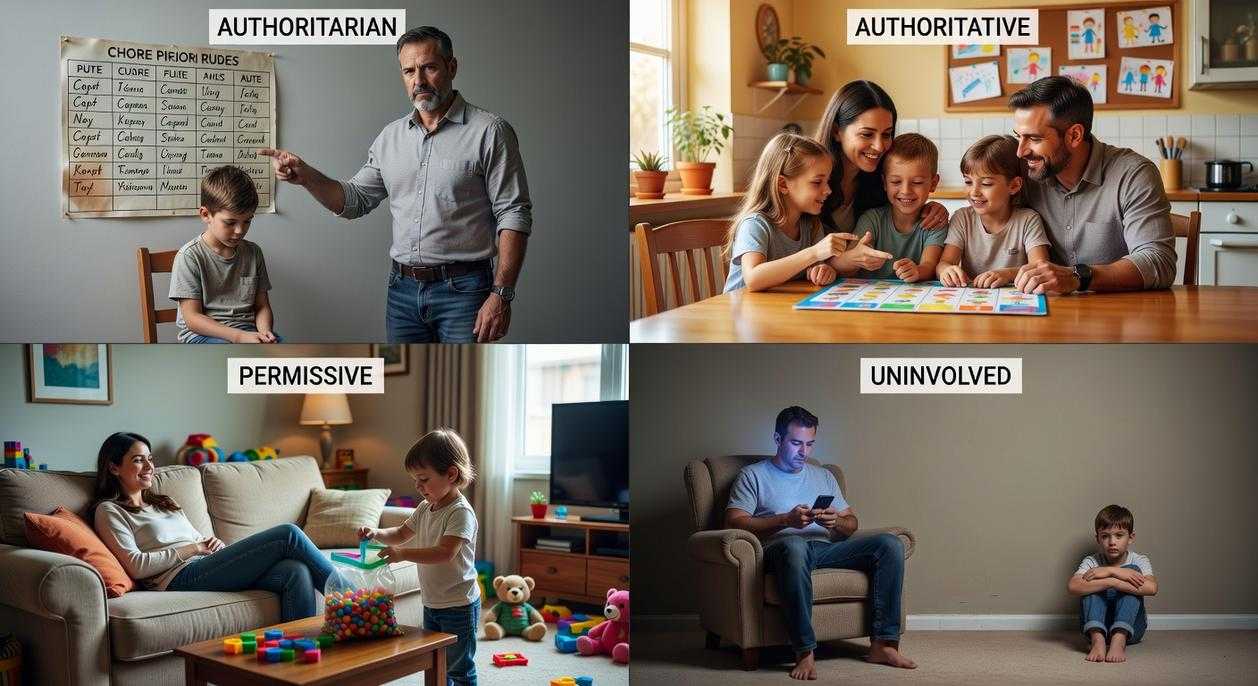
Conventional discipline is a parenting approach built on clear rules, respect for authority, and consequence-based learning. In simple terms, it teaches children that actions lead to predictable outcomes. If a rule is broken, a consequence follows. If a rule is respected, a reward may follow. The structure is intentional and direct (and, for many parents, reassuringly straightforward).
Core Principles and Key Practices
At its heart, this method relies on tools like timeouts, removal of privileges, and reward systems such as sticker charts. A child who refuses to share might lose screen time. A week of completed chores might earn extra playtime. These strategies stem from behaviorist psychology, particularly B.F. Skinner’s theory of operant conditioning, which shows behavior can be shaped through reinforcement and consequences (American Psychological Association).
The primary goal is simple: teach right from wrong, ensure safety, and prepare children to function within societal rules. Schools, workplaces, and communities all operate on expectations and consequences.
That said, debates around gentle parenting vs traditional discipline continue. Some argue strict structures suppress emotional expression. I personally believe structure provides security—when delivered calmly and consistently. Passed down through generations, this approach remains popular because, quite frankly, it often works.
Head-to-Head: How the Approaches Differ in Practice
When it comes to meltdowns in the cereal aisle (because it’s always the cereal aisle), the difference shows up fast. In a gentle approach, a parent kneels down and says, “You’re really upset. You wanted the blue box, huh?” That’s co-regulation—helping a child calm down through connection before expecting self-control. Compare that to a conventional response: “That’s enough. If you don’t stop, you’re getting a timeout.” The goal there is immediate behavior correction. Supporters argue it teaches limits quickly. Critics counter that it may stop the noise, but not address the feeling underneath.
Similarly, imagine a child refusing to share a toy. A gentle parent might say, “Your friend feels sad. How can we solve this?” The focus is empathy and collaborative problem-solving. A more traditional line sounds like, “If you don’t share, the toy gets put away.” Clear, direct, and consequence-driven. Some parents prefer this clarity (and honestly, it can feel efficient). Yet others wonder: does it teach generosity, or just compliance?
Communication style also differs. Gentle parenting leans dialogue-focused: “Tell me what’s going on.” Conventional discipline tends to be directive-focused: “Do this now.” One invites conversation; the other emphasizes authority.
At its core, gentle parenting vs traditional discipline separates over emphasis. Gentle parenting asks, “Why is this happening?” Conventional discipline asks, “How do we stop this?” For a deeper dive into addressing tantrums through a gentle parenting lens, explore real-life scripts and strategies that turn chaos into connection.
Finding Your Fit: A Hybrid Approach
Parenting rarely fits into neat boxes. Despite the heated debates around gentle parenting vs traditional discipline, most families land somewhere in between (because real life is messy). It’s not all or nothing—you can blend structure with empathy in ways that feel natural and effective.
Start with intentional self-reflection:
- What are my long-term goals for my child? Independence, kindness, resilience?
- What feels most authentic to my personality? Consistency matters more than perfection.
- What does my child respond to best? Some kids need firmer boundaries; others need more dialogue.
Here’s a practical way to apply a hybrid model:
- Use clear, non-negotiable rules for safety (holding hands in a parking lot, wearing helmets).
- Shift to coaching during emotional conflicts (sibling squabbles become problem-solving moments).
Pro tip: Write down your top three “hard rules” and three “teachable moments.” This simple split keeps discipline predictable while preserving connection.
Building a Parenting Style That Works for You
You now have a clear map of the philosophies, goals, and daily realities behind gentle parenting vs traditional discipline. Some argue you must pick one camp and stick with it. But THE REAL WORK is responding to your child with intention and love. Labels do not raise children; parents do.
The most effective approach is one that is consistent, rooted in values, and adaptable as your child grows. Start today:
- Notice your child’s reactions.
- Reflect on your feelings.
- Adjust with patience.
This is CONSCIOUS PARENTING, built step by step.
Building Stronger Bonds Through Better Discipline Choices
You came here looking for clarity on gentle parenting vs traditional discipline—and now you have a clearer understanding of how each approach shapes your child’s emotional growth, behavior, and long-term confidence.
Parenting can feel overwhelming, especially when you’re stuck between wanting cooperation and fearing you’re being too harsh or too soft. That tension is real. The good news? You don’t have to choose confusion or guilt. By applying calm communication, clear boundaries, and consistent follow-through, you can guide behavior without damaging connection.
The next step is simple: start small. Choose one gentle strategy to practice this week—whether it’s validating feelings before correcting behavior or replacing punishment with problem-solving. Consistency creates change.
Thousands of modern parents are shifting toward connection-based discipline because it works. If you’re ready to reduce power struggles, strengthen trust, and raise emotionally resilient kids, explore more of our practical parenting guides and tools today. Your calmer, more confident parenting journey starts now.
 Whitney Newmanativer is the kind of writer who genuinely cannot publish something without checking it twice. Maybe three times. They came to childcare hacks for busy moms through years of hands-on work rather than theory, which means the things they writes about — Childcare Hacks for Busy Moms, Bolytex Gentle Parenting Deep Dives, among other areas — are things they has actually tested, questioned, and revised opinions on more than once.
That shows in the work. Whitney's pieces tend to go a level deeper than most. Not in a way that becomes unreadable, but in a way that makes you realize you'd been missing something important. They has a habit of finding the detail that everybody else glosses over and making it the center of the story — which sounds simple, but takes a rare combination of curiosity and patience to pull off consistently. The writing never feels rushed. It feels like someone who sat with the subject long enough to actually understand it.
Outside of specific topics, what Whitney cares about most is whether the reader walks away with something useful. Not impressed. Not entertained. Useful. That's a harder bar to clear than it sounds, and they clears it more often than not — which is why readers tend to remember Whitney's articles long after they've forgotten the headline.
Whitney Newmanativer is the kind of writer who genuinely cannot publish something without checking it twice. Maybe three times. They came to childcare hacks for busy moms through years of hands-on work rather than theory, which means the things they writes about — Childcare Hacks for Busy Moms, Bolytex Gentle Parenting Deep Dives, among other areas — are things they has actually tested, questioned, and revised opinions on more than once.
That shows in the work. Whitney's pieces tend to go a level deeper than most. Not in a way that becomes unreadable, but in a way that makes you realize you'd been missing something important. They has a habit of finding the detail that everybody else glosses over and making it the center of the story — which sounds simple, but takes a rare combination of curiosity and patience to pull off consistently. The writing never feels rushed. It feels like someone who sat with the subject long enough to actually understand it.
Outside of specific topics, what Whitney cares about most is whether the reader walks away with something useful. Not impressed. Not entertained. Useful. That's a harder bar to clear than it sounds, and they clears it more often than not — which is why readers tend to remember Whitney's articles long after they've forgotten the headline.