

Parenting in today’s world comes with an overwhelming amount of advice, opinions, and conflicting information. If you’re searching for practical parenting tips, gentle parenting strategies, or simple childcare hacks that actually work, you’re in the right place. This article is designed to give you clear, research-backed guidance you can confidently apply in your daily life.
We focus on what truly supports healthy child development, drawing from established studies and early learning research findings to ensure the advice shared here is grounded in evidence—not trends. From nurturing emotional resilience to encouraging curiosity and independence, you’ll find actionable insights that align with modern parenting goals.
Whether you’re navigating toddler tantrums, building positive routines, or supporting your child’s early development, this guide will help you make informed, thoughtful decisions. Our goal is simple: to provide trustworthy, practical support that helps you feel more confident and connected in your parenting journey.
The First Five Years: What Science Says About Your Child’s Thriving Mind
At 2 a.m., with the soft hum of the baby monitor and the faint smell of lavender lotion in the air, many parents wonder: Am I doing enough? The advice online is loud, conflicting, and relentless. Understandably, it’s overwhelming.
Early learning research findings show that 90% of brain development happens before age five. In other words, these years matter—but not in the perfection-driven way social media suggests (yes, even if your toddler prefers blocks over flashcards like a tiny rebel).
While some argue kids “turn out fine” no matter what, evidence tells us responsive conversation, warm eye contact, and playful routines build lasting neural connections.
More Than Fun and Games: Why Play is the Engine of Early Learning
When people hear “play-based learning,” they sometimes picture chaos—blocks everywhere, paint on sleeves, and very little “real” teaching. However, research consistently shows that play-based learning is the most effective method for cognitive development in children under five. In simple terms, play-based learning means children explore ideas through hands-on, self-directed activities rather than formal lessons.
So what’s actually happening during play? A lot more than meets the eye.
Through unstructured play (activities led by the child, not an adult script), children build:
- Problem-solving skills by figuring out how to stack blocks without toppling them
- Creativity by turning a cardboard box into a spaceship (or a bakery, depending on the day)
- Executive function, which refers to mental skills like memory, focus, and self-control
Meanwhile, studies on rote learning—repetitive “drill and practice” methods like flashcards for toddlers—show limited long-term academic benefits. Children may memorize facts early, but without playful exploration, they often struggle to apply knowledge later. In other words, knowing the alphabet song isn’t the same as loving books.
If you’re navigating daily power struggles, try this gentle parenting shift: turn cleanup time into a game. Instead of commanding, invite your child to “rescue the red toys” or “sort by color.” Suddenly, cooperation feels collaborative, not forced.
In the end, play isn’t a break from learning—it is the learning.
Building a Word-Rich World: The Science of Early Language Acquisition
From the very beginning, your baby’s brain is wiring itself based on interaction. The “serve and return” principle—when a baby coos (the serve) and you respond with words, eye contact, or a smile (the return)—literally shapes neural connections. In other words, conversation builds architecture. Even pre-verbal infants benefit. When you answer their babbles as if you’re in a real dialogue (because you are), you strengthen pathways tied to language, attention, and emotional regulation. What’s in it for you? A child who communicates more clearly, connects more deeply, and learns more confidently.
Just as powerful, however, is reading aloud daily. Study after study shows a strong link between being read to and future literacy, vocabulary size, and academic success (American Academy of Pediatrics). Children exposed to frequent reading hear thousands more words than peers who aren’t. That gap adds up quickly. Think of it as compound interest, but for words.
Additionally, try “narration”—simply describing what you’re doing: “Now I’m washing the red apple.” It feels small, yet early learning research findings confirm that consistent language exposure boosts cognitive growth. Over time, these tiny moments create big gains.
Pro tip: Focus on:
- Back-and-forth exchanges
- Daily reading routines
- Simple, descriptive narration
Ultimately, a word-rich world today means stronger literacy, smoother school transitions, and greater confidence tomorrow.
Nurturing the Heart: Key Findings on Social-Emotional Foundations
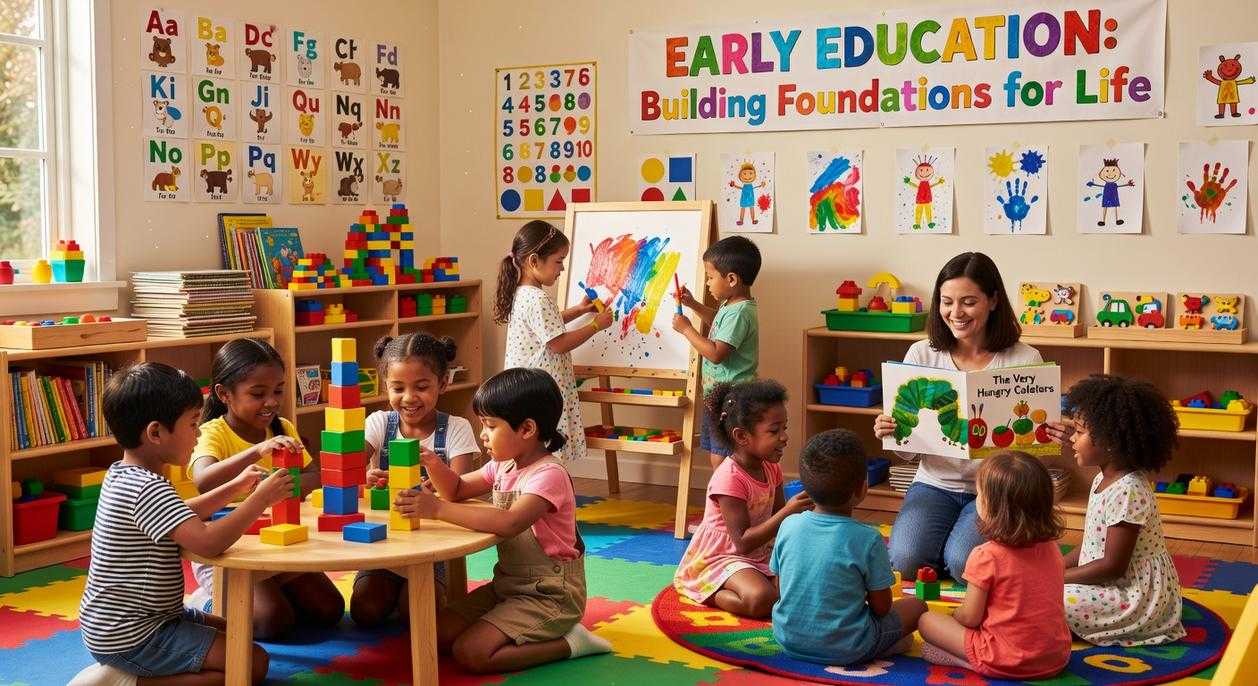
Social-Emotional Learning (SEL) is the process of developing self-awareness, self-control, and interpersonal skills. In plain terms, it’s how children learn to understand their feelings, manage impulses, and build healthy relationships (yes, even when someone grabs the last cookie).
Here’s what many competitors overlook: emotional intelligence isn’t a “soft” skill. Research from organizations like CASEL and longitudinal studies from Duke University show that a child’s emotional intelligence is a stronger predictor of future success and well-being than early academic ability (Jones, Greenberg, & Crowley, 2015). That challenges the common argument that reading at four matters more than regulating frustration at five. Academics are important—but without emotional regulation, knowledge doesn’t travel far.
Use early learning research findings in the section once exactly as it is given
From a motherhood wellness lens, co-regulation is key. Co-regulation means a calm adult nervous system helps steady a child’s nervous system. Gentle parenting emphasizes responsive presence because neuroscience shows children borrow our calm before they can create their own (Center on the Developing Child, Harvard University).
| Skill | What It Looks Like | Simple Practice |
|---|---|---|
| Self-awareness | Naming feelings |
Ask, “Is that frustration?” |
| Self-control | Pausing before reacting | Model deep breathing |
| Empathy | Noticing others’ emotions | Discuss storybook characters |
Storybooks are underrated training grounds. Pause mid-story and ask how a character feels. Building emotional vocabulary today strengthens resilience tomorrow. For broader shifts shaping families, explore how modern parenting is evolving in 2026 key trends to watch.
Predictability and Peace: How Routines Shape Young Brains
Chaos vs. consistency. Free‑for‑all mornings vs. the SAME goodbye hug each day. The difference isn’t just emotional — it’s biological.
Research shows that predictable routines reduce cortisol (the stress hormone) in children, freeing up mental resources for learning and exploration. Lower cortisol means the brain can focus on curiosity instead of self‑protection (and that’s when the magic happens).
But let’s compare:
- Rigid scheduling: 7:00 sharp or else. Stress spikes when life happens.
- Loving rituals: A bedtime song, a silly handshake, a wave at daycare.
One feels like boot camp. The other feels like HOME.
Routines aren’t about control; they’re about SIGNALS OF SAFETY. Think of them as a child’s favorite rerun — predictable, comforting, and always ending the same way.
Putting Research Into Practice: Small Steps for a Big Impact
Play, conversation, emotional validation, and routine aren’t extras—they’re the foundation. These small, repeatable habits shape how children think, speak, and feel. early learning research findings show that consistent, responsive interaction builds stronger neural connections.
The goal isn’t perfection; it’s intentionality (because real life is messy). Progress beats pressure every single time.
Focus on benefits:
- Five more minutes of bedtime reading strengthens language.
- Narrating a grocery trip builds vocabulary and patience.
You are your child’s most important teacher. Why not choose one simple step this week and start today?
Nurturing Your Child’s Growth Starts Today
You came here looking for practical, reassuring guidance on how to support your child’s development with confidence—and now you have it. From simple daily habits to mindful connection, you’ve seen how small, consistent actions can create a powerful impact on your child’s emotional security and cognitive growth.
The truth is, parenting can feel overwhelming when you’re unsure if you’re “doing enough.” That uncertainty is the real pain point. But when you lean into proven strategies backed by early learning research findings, you replace doubt with clarity and intention. You don’t need perfection. You need presence, consistency, and the right tools.
Now it’s time to take action. Choose one strategy you learned today and implement it consistently this week. Observe the changes. Build from there.
If you’re ready for step-by-step parenting guidance, practical childcare hacks, and trusted resources that thousands of modern parents rely on, explore more of our expert-backed insights today. Start building a calmer, more connected home—one intentional step at a time.
 Ask Anthony Coughlinazey how they got into curious collections and you'll probably get a longer answer than you expected. The short version: Anthony started doing it, got genuinely hooked, and at some point realized they had accumulated enough hard-won knowledge that it would be a waste not to share it. So they started writing.
What makes Anthony worth reading is that they skips the obvious stuff. Nobody needs another surface-level take on Curious Collections, Childcare Hacks for Busy Moms, Bolytex Gentle Parenting Deep Dives. What readers actually want is the nuance — the part that only becomes clear after you've made a few mistakes and figured out why. That's the territory Anthony operates in. The writing is direct, occasionally blunt, and always built around what's actually true rather than what sounds good in an article. They has little patience for filler, which means they's pieces tend to be denser with real information than the average post on the same subject.
Anthony doesn't write to impress anyone. They writes because they has things to say that they genuinely thinks people should hear. That motivation — basic as it sounds — produces something noticeably different from content written for clicks or word count. Readers pick up on it. The comments on Anthony's work tend to reflect that.
Ask Anthony Coughlinazey how they got into curious collections and you'll probably get a longer answer than you expected. The short version: Anthony started doing it, got genuinely hooked, and at some point realized they had accumulated enough hard-won knowledge that it would be a waste not to share it. So they started writing.
What makes Anthony worth reading is that they skips the obvious stuff. Nobody needs another surface-level take on Curious Collections, Childcare Hacks for Busy Moms, Bolytex Gentle Parenting Deep Dives. What readers actually want is the nuance — the part that only becomes clear after you've made a few mistakes and figured out why. That's the territory Anthony operates in. The writing is direct, occasionally blunt, and always built around what's actually true rather than what sounds good in an article. They has little patience for filler, which means they's pieces tend to be denser with real information than the average post on the same subject.
Anthony doesn't write to impress anyone. They writes because they has things to say that they genuinely thinks people should hear. That motivation — basic as it sounds — produces something noticeably different from content written for clicks or word count. Readers pick up on it. The comments on Anthony's work tend to reflect that.