
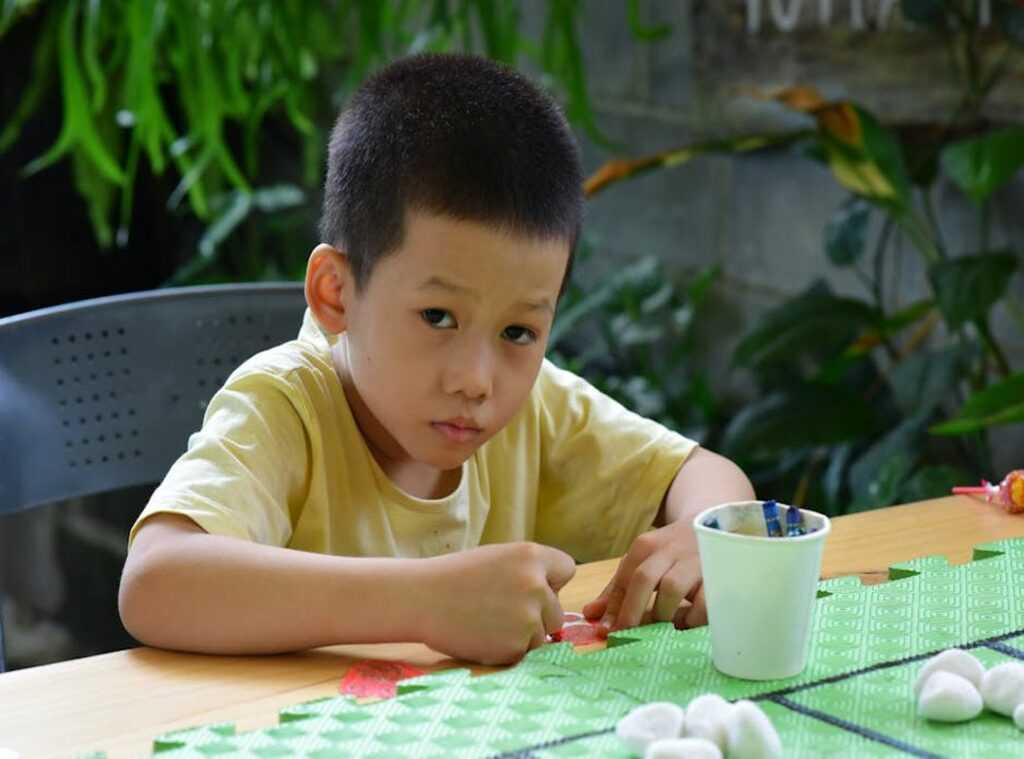
Ever felt like you’re on call 24/7 as a parent? You’re not alone. We all crave a little peace while ensuring our kids grow and learn meaningfully.
The constant demand for entertainment can be exhausting. But here’s the good news: you don’t have to sacrifice your sanity or their development. As parents, we’ve navigated this exact challenge.
The key isn’t about stepping back completely. It’s about equipping kids with the skills for independent, creative exploration. Think of a toolkit filled with DIY learning activities that engage your child’s curiosity without your constant presence.
This isn’t about ignoring them. It’s about empowering them. You give them the tools to thrive, and in turn, get a breather yourself.
Ready to dive in? Let’s transform playtime into something smarter.
The ‘Why’ Behind Independent Play: A Child’s Secret Weapon
Independent play is often seen as a break for parents, but let’s switch gears. It’s not just your coffee break; it’s fostering true independence in your child. When kids engage in self-guided play, they learn to trust their own instincts.
Ever watch a kid decide which block goes on top? That’s DIY learning activities in action.
Now, think about the problem-solving skills they’re building. A child figuring out how to balance blocks or sort objects without adult intervention is like watching a mini-engineer at work. It’s not just play; it’s practice for real-world challenges.
And yes, sometimes they get it wrong (cue frustration), but that’s part of the learning curve.
Independent play is also the breeding ground for creativity and imagination. Without the pressure of following prescriptive instructions, kids can explore worlds of their own making. A cardboard box isn’t just a box; it’s a spaceship, a castle, or a secret cave.
This unstructured time is priceless.
And let’s not forget concentration. Independent play acts as a workout for their attention muscles. They learn to focus on a single task for longer periods, which is a skill that will serve them well beyond childhood.
It’s like gentle parenting principles in action, respecting a child’s ability to guide their own play.
By the way, if you’re looking for tips, check out these simple tricks encourage kids tidy up. It’s all about building confidence and self-worth. Who knew playtime could be so solid?
Crafting the Perfect Play Invitation: Simple Steps to Success
An “invitation to play” is a setup that naturally draws a child in, sparking curiosity. It’s the difference between a dull toy box and a magical world just waiting to be discovered. So, how do you create one?
Accessibility is everything. Low, open shelves with clear bins let kids see their options. It’s empowering, and let’s be real (they’re) more likely to engage if they can actually reach their toys.
Now, let’s talk about the power of rotation. Ever notice how fewer choices can lead to more focused play? Kids don’t need a sea of toys.
Believe me, a curated selection of high-quality items will hold their attention. Swapping out 2-3 bins every Monday keeps things fresh and exciting.
Defining the play space is also key. A small rug or a specific corner helps contain the mess and focuses your child’s attention. It’s not about creating an Instagram-perfect scene (though if you do, more power to you).
It’s about function. The goal is to make DIY learning activities not just possible, but enticing.
Need more inspiration? Check out these 50 independent activities children can do at home. It’s a treasure trove of ideas to keep kids busy and learning.
Remember, perfection is overrated. The aim is to build independence and creativity. Your child doesn’t care if the bins match the curtains.
They just want to play, explore, and learn. Isn’t that what it’s all about?
Screen-Free Fun: Activities for Every Age
Finding engaging, screen-free activities for kids can feel like a never-ending quest, right? But trust me, it’s worth it. DIY learning activities can be a game changer. to some age-specific ideas.

For toddlers, ages 1 to 3, it’s all about sensory and motor skills. I swear by sensory bins. Fill one up with oats and let your little one scoop and pour to their heart’s content.
It’s messy but watch them light up. Next, try a “posting” activity. Give them pom-poms and a water bottle, and let them drop the pom-poms in.
Simple, but it builds hand-eye coordination. Then there’s stacking. Large blocks or rings are perfect.
They’re easy to handle and help with motor skills. And don’t underestimate the power of stickers. Large, reusable ones are great for peeling and sticking.
It’s all about the little victories.
Preschoolers, ages 3 to 5, are a different ballgame. They need activities that nurture early concepts. A “tinker tray” is a winner.
Fill it with loose parts like buttons and sticks. It encourages creativity and problem-solving. Pattern block templates are another hit.
It’s tactile and effective. Scissor practice strips are also a must. They improve fine motor skills and prepare them for school.
They introduce shapes and patterns in a fun way. For pre-writing skills, use a tray with sand or salt. Let them trace letters with their fingers.
For kids in early elementary, ages 6 to 8, the focus shifts to complex thinking. LEGO challenges are fantastic. Ask them to build a vehicle that can roll.
It pushes their creativity and engineering skills. A comic-book station is another great idea. Provide blank panels and markers.
Let their imagination run wild. An “inventor’s box” with recycled materials is also a gem. It encourages innovation and resourcefulness.
And don’t forget simple science experiments. A sink/float test with household objects is both fun and educational.
And hey, if you’re looking to keep all these materials organized, check out these Organizational Tips Clutter Free Playroom. Keeping things tidy makes it easier to jump into these activities without the chaos.
So, there you have it. A few ideas to keep those screens off and those little minds buzzing.
I’m Bored: What Now?
Every parent knows the dreaded “I’m bored!” It’s like nails on a chalkboard. But let’s be real. Asking your kids to figure it out themselves isn’t always the answer.
One trick that works? The 5-Minute Connector. Engage with them for just five minutes.
Seriously, just start the DIY learning activities together. Once they’re hooked, they’ll dive in on their own. You slip away and get your own moments of peace.
Genius, right?
Then there’s modeling. Kids mimic us. If they see you engrossed in something (like) actually reading a book instead of scrolling your phone.
They’re more likely to entertain themselves. I’ve noticed this works wonders.
Need some lines that aren’t just “figure it out”? Try this: “Boredom is where creativity begins! I can’t wait to see what your brain comes up with.” Or how about, “You’re a great problem-solver.
I know you’ll find something amazing to do.” These gentle scripts encourage them without you sounding like a broken record.
It’s about building trust. You’re showing them they’re capable. They’re not just passively waiting for fun to land in their laps.
It’s a small shift, but it can change everything. So, next time you’re faced with “I’m bored,” remember these tips.
Help Your Child, Help Yourself
You’re not just getting a list of DIY learning activities. You’ve got a philosophy and guide to lighten your load. Exhausted from being the “chief entertainer”?
This is your path to balance. When kids learn to play independently, they gain lifelong skills, and you get some breathing room. Imagine being more present because you’re recharged.
That’s solid. So, here’s what you do: This week, pick one activity. Set up an “invitation to play” on a small tray.
See what unfolds. It’s simple, low-stakes, but impactful. Let your child explore, and feel the difference.
Ready to start?
 Whitney Newmanativer is the kind of writer who genuinely cannot publish something without checking it twice. Maybe three times. They came to childcare hacks for busy moms through years of hands-on work rather than theory, which means the things they writes about — Childcare Hacks for Busy Moms, Bolytex Gentle Parenting Deep Dives, among other areas — are things they has actually tested, questioned, and revised opinions on more than once.
That shows in the work. Whitney's pieces tend to go a level deeper than most. Not in a way that becomes unreadable, but in a way that makes you realize you'd been missing something important. They has a habit of finding the detail that everybody else glosses over and making it the center of the story — which sounds simple, but takes a rare combination of curiosity and patience to pull off consistently. The writing never feels rushed. It feels like someone who sat with the subject long enough to actually understand it.
Outside of specific topics, what Whitney cares about most is whether the reader walks away with something useful. Not impressed. Not entertained. Useful. That's a harder bar to clear than it sounds, and they clears it more often than not — which is why readers tend to remember Whitney's articles long after they've forgotten the headline.
Whitney Newmanativer is the kind of writer who genuinely cannot publish something without checking it twice. Maybe three times. They came to childcare hacks for busy moms through years of hands-on work rather than theory, which means the things they writes about — Childcare Hacks for Busy Moms, Bolytex Gentle Parenting Deep Dives, among other areas — are things they has actually tested, questioned, and revised opinions on more than once.
That shows in the work. Whitney's pieces tend to go a level deeper than most. Not in a way that becomes unreadable, but in a way that makes you realize you'd been missing something important. They has a habit of finding the detail that everybody else glosses over and making it the center of the story — which sounds simple, but takes a rare combination of curiosity and patience to pull off consistently. The writing never feels rushed. It feels like someone who sat with the subject long enough to actually understand it.
Outside of specific topics, what Whitney cares about most is whether the reader walks away with something useful. Not impressed. Not entertained. Useful. That's a harder bar to clear than it sounds, and they clears it more often than not — which is why readers tend to remember Whitney's articles long after they've forgotten the headline.